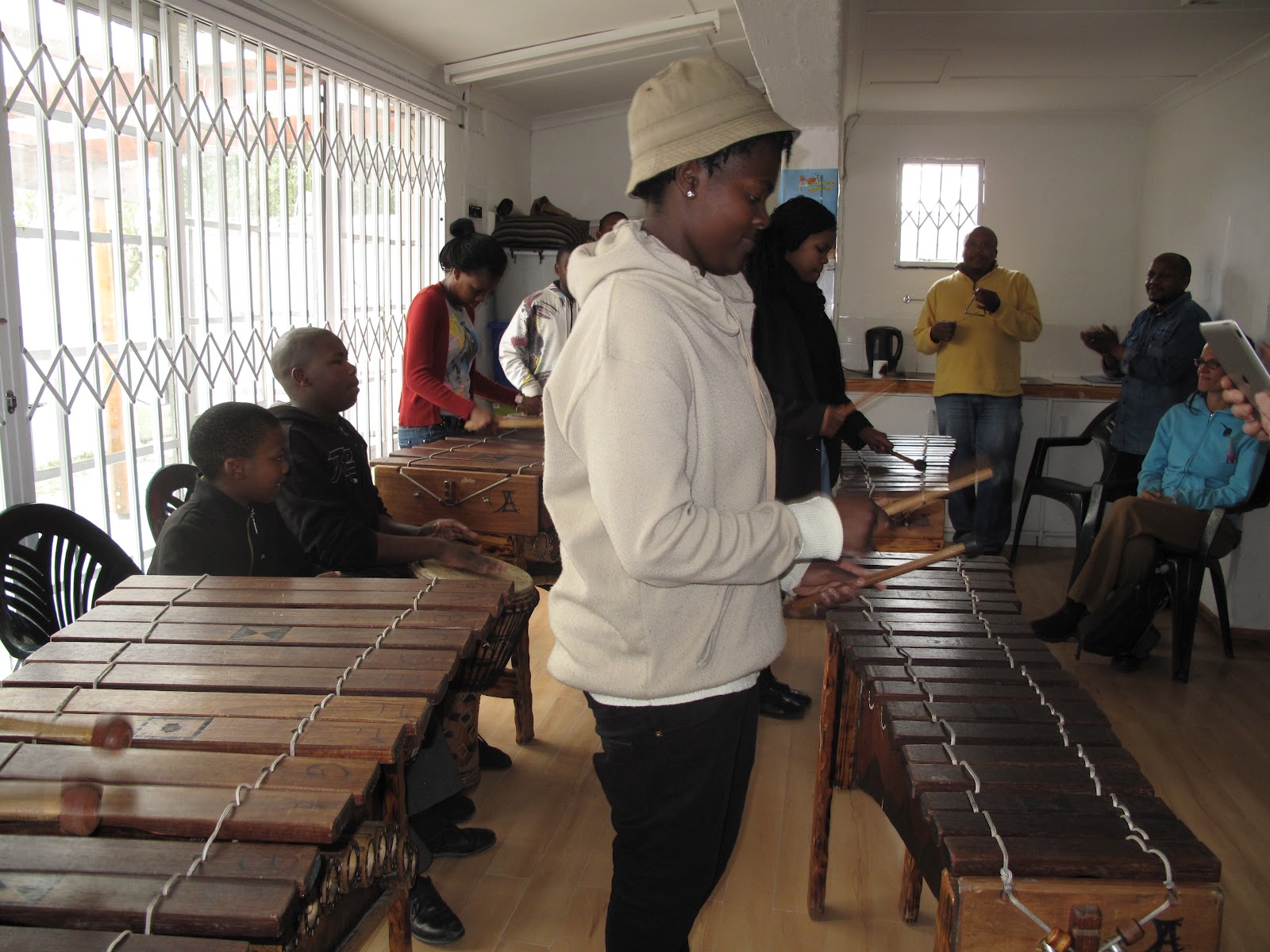
On Wednesday morning our OPSEU delegation began our first scheduled visits to projects funded by the Stephen Lewis Foundation (SLF). At their suggestion, we split into two groups so that we could witness more than one project in each city – and we would make a smaller footprint on each of the projects as we visited them.
Group A - Tateni House in Mamelodi, Pretoria.
As our van entered the grounds of Tateni, Regina Mogkogong, Executive Director of Tateni House, scolded us for being late! Traffic had delayed our driver but that didn’t matter to Regina. She soon welcomed us and sparkled with warmth as she introduced all of her staff and volunteers at Tateni, Among them are social workers, home care givers, a Psychologist, driver, Supervisor of Operations, Supervisor of Home Based Care, Administrative Assistant, founding member and Regina who has retired twice in her life already!

Regina has been involved in Tateni since 1995 when she was involved in Soroptomists International. Their group adopted 3 families by furnishing their houses, setting up food gardens, etc. She had worked in HIV/AIDS with the South African government and then in rural health. She retired and joined a literacy program and worked in Recognition of Prior Learning (RPL) for a number of years until she began with Tateni. Tateni was founded by a nurse, Veronica Nkosa and the name comes from a small child tottering. While the child walks, s/he goes Ta – ta – ta… Mainly set up for patients with HIV/AIDS, the group struggled with the ignorance and denial taking place re: HIV/AIDS at the time. Patients were not accepted by their families. Some were locked inside their homes, others locked out and kicked out to fend for themselves. Hospitals would not admit patients because there was no cure; in short they were completely neglected and needed someone or some people to care for them.


Still today the main problem is nursing people in their own homes. Tateni saw people who were critically ill, terminally ill and saw the need to set up a hospice. They also saw the traumatization of children as they watched their relatives dying. So began the Care and Support of Vulnerable Children program. Kids were identified in schools, where they were obviously neglected, hungry and uncared for in many cases. Tateni began drop-in centres and home based care. Others would go to the centres and have food cooked for them there.
In their work with the schools, each carer is responsible for 10 families. If there is a family with 4 children, you cannot just look after one child. Tateni staff go into their homes to see how families are living and make up a needs list. Especially in the informal settlements they look to see if there is anything they can provide for the homes to make the physical space more comfortable, e.g. Regina called up a carpet company to donate a piece of carpet for a hut where children are sleeping on a dirt floor. They were committed to making sure these children looked like other children and gave them boxes of toys, clothes and also provided counselling with Tateni’s own psychologist as many children have demonstrated either aggression or depression. There is a tremendous need for them to express these emotions so the psychologist’s assistance is key.
As well as Tateni’s direct services, there is a group called Friends of Tateni with a program called Reach for a Dream. They take children camping and on outings and group children together quarterly for their birthdays. For example, those with birthdays from January to March have a joint celebration and it becomes a "bumper birthday" with lots of photos, cake and toys.
The property Tateni stands on was bought from the municipality by the Soroptomists – it only cost R2000, a gift! The building itself was completed with funds from a twin city in Japan. When Tateni moved into the premises in 2006, they had big dreams for an office centre, a hospice, a youth and development centre, a training centre and more – and yet no-one has been willing to provide the money necessary for the completion of this dream. They do have a great vegetable garden with lots of spinach, onions, carrots, beets and tomatoes and their flower gardens are very welcoming.


In 2008, the National Lottery Fund gave them enough money to purchase a panel van (pick-up truck) and another car for their home visits. They also need to have a storage area for the grains and dry food, but recently this was flooded and caused great distress. Tateni has to have food stored to meet the needs of the people. The group relies heavily on community friends who offer goods, e.g. filing cabinets, other furniture.
There have been some great successes at Tateni – for example, a boy who finished his schooling, earned money for school clothes, paraffin, groceries, etc. He finished school, Tateni trained him as one of their own people and he got his licence and he is now working for ADT Security company. You would not recognize him as the same traumatized child who came to us from that small shack in the townships, said Regina. This gives Tateni satisfaction that some have benefitted from their interventions. In a testimony from one of the patients, one young man said that just getting water from Tateni and being able to wash his whole body, improved his life!
"How did we get our funding from the Stephen Lewis Foundation? VSO (Volunteer Services Overseas) sends professionals out to volunteet and to participate in "shared skills". This particular volunteer, Peter, sat on the internet and surfed the web. That’s how we found the Stephen Lewis Foundation, we applied and were accepted and we are now into our 5th application. As well as helping the community. Tateni has 51 people working there – 37 carers, 14 -15 child carers, other coordinators and many can now consider themselves "employed". If they could realize what we do, the government would provide funding, sign agreements, etc.", said Regina.
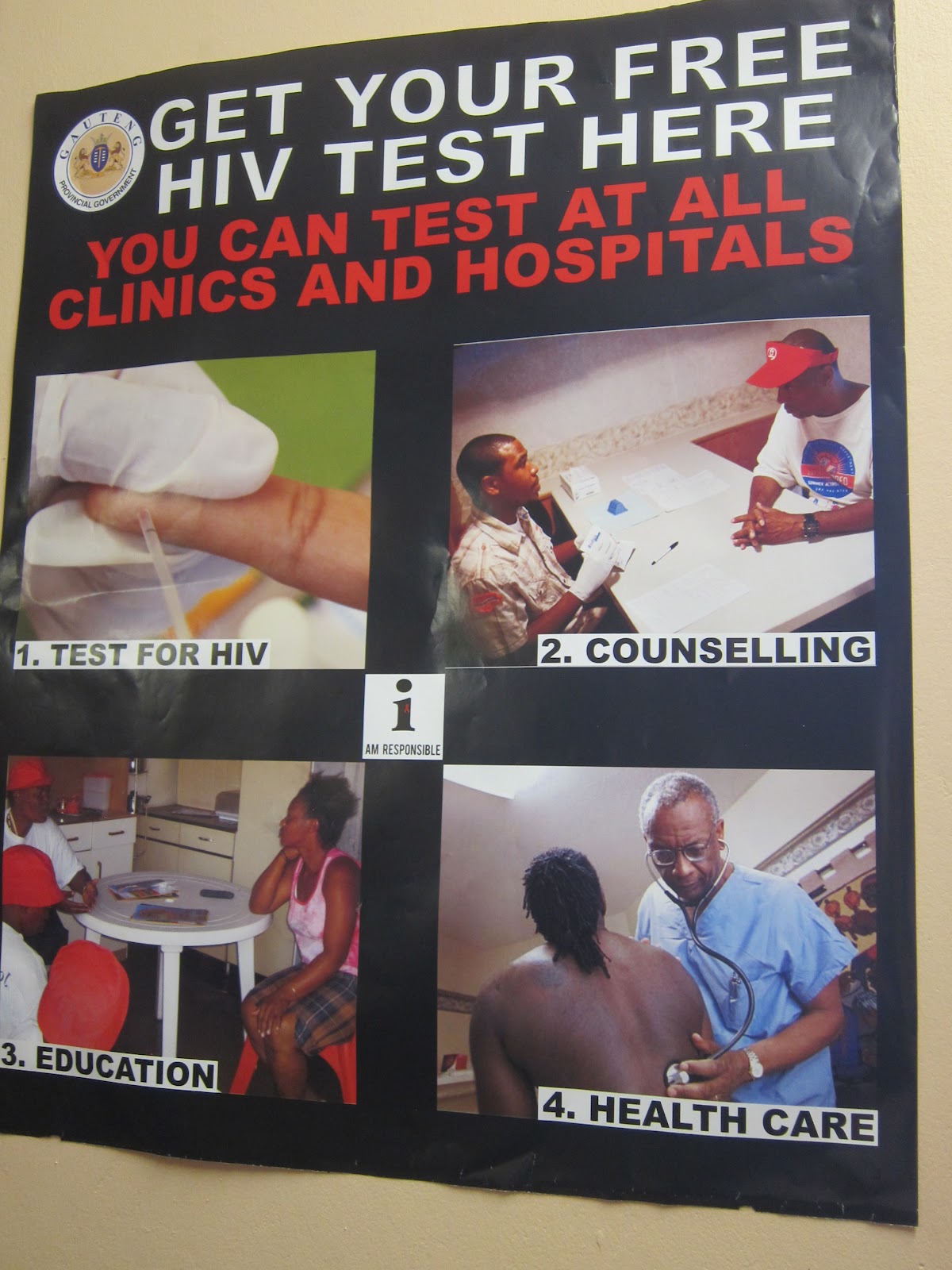
Education around HIV/AIDS is crucial everywhere. Getting people to understand that that AIDS is transmitted mostly through sexual contact or mother to child transmission and sometimes through blood transfusions – all of this is key. Here it is not so much transmission through drugs. Talking about sex within the African community is difficult – it is almost taboo to talk sex. It is very important to do so, however, especially children in schools have to be educated about sex. We use sex education tools (dildos, etc.) to show children, but parents often react very strongly to this kind of explicit sex education. As part of Tateni education programs, they demonstrate by putting a condom on a broomstick – or engage in puppetry. There are no drugs to cure HIV/AIDS, but it can be prevented and we mourn all the deaths that have taken place.
One of the Gogos said she just takes a pack of condoms and puts it on top of her grandson’s clothes – and hopes only that it is at least opened.
After our discussion with staff and volunteers at Tateni House, we went on a couple of house visits in the Mamelodi East community. Our first visit was to a family home where the husband lay dying of AIDS, but the wife does not know he has AIDS. She thinks he has diabetes, so his secret will die with him.
Our second stop was to see Patrick, a 40 year old man who weighs perhaps 500 lbs and suffers from chronic obesity. He cannot get out of bed or leave his room at all and so his family has to bring food for him to cook for himself – which he does so on a small two-burner stove beside his bed. Our nurses, Shannon and Amy were wondering if he might have a thyroid problem and whether he has ever been tested for this or for Glandular fever, for example.
Regina and staff took us to Mamelodi West Clinic where there are approximately 343 TB patients. We were struck as we walked through the general waiting area to get to the TB clinic. Most patients have AIDS and TB. The carers care for 10 patients each. The challenge is still for people to come forward for testing and then once diagnosed, it is crucial to follow up with people to make sure they take their medication, under observation. Despite Tateni’s work, the percentage of patients with TB is going up because of people defaulting on their medication, so we are trying to eliminate defaulters. We have to go from house to house to check these defaulters – and to look for new cases in their families. At the houses we watch them taking their medication, watch them drinking liquids, etc.
There are approximately 35 people testing each day and the TB clinic admits about 50 per month. At the clinic, Tateni does not isolate the TB patients, but teach them about infection control, washing, the need for sunshine and exercise, etc. If they are not sick, they do the infection control at home. The cure rate is going up as the group is observing and monitoring constantly. The medication is taken daily for 6 to 9 months. The TB clinic administrator testified to us that Tateni is helping greatly with their work. There is a testing for HIV/AIDS and ARV clinic there as well.
When asked how many general patients are seen at this clininc, we were told 13,000 per month – perhaps more than usual because 3 other clinics in Mamelodi West are currently closed for renovations.
Our next stop was the primary school to witness Tateni’s school feeding program. After the general population at the school has eaten, a group of 94 children are fed at approximately 2:30 pm every day. The menu varies and while we were there it was chicken, rice, "pap", pumpkin and salad. These children have been identified as those with special needs, that is, either one of their parents has HIV/AIDS or they are traumatized because of a loss of someone from HIV/ADIS or other diseases.
At the Lusaka Secondary School nearby, we met the Supervisor of another of Tateni’s programs, and visited a class of 56 students inside their classroom. It is a support group for these secondary students – again students who come from families affected by HIV/AIDS or TB, etc. There, inside that classroom, they deal with issues like teen pregnancies, HIV/AIDS, violence against women, etc. School begins at 8 a.m. and ends at 2:30 so between 2:30 pm and 3:30 pm, these kids are engaged in other activities such as chess, football (soccer), discussion groups, etc. together. They also have access to Tateni’s psychologist for support. This group has also started a community garden and the two women who help the students with the garden performed a little skit with their watering cans to show us what they do together.


The Supervisor spoke and then two students stood up and gave presentations about violence against women (‘You don’t have to be a victim of male violence", said this young female Grade 8 student, "you can stop the abuse, you have the right to resist and get support!").
Every time a student spoke and each time we introduced ourselves, the students broke out into a chant and clapping which went as follows:
"Thank you (clap, clap, clap), very much (clap, clap, clap) Keep it up (clap, clap, clap) Shi-i-i-ne!(both hands in the air waving)"
When we returned to the Tateni office, we thanked Regina and the other staff for a wonderful visit and assured her we would take the message back to our union and others in Canada that their funds are supporting amazing grassroots work in Mamelodi and elsewhere.
Regina thanked us for our support through the Stephen Lewis Foundation and asked us to spread the word about their work and their needs.
Group B – Cotlands, Johannesburg
We arrived at Cotlands headquarters and were met by Yani Horn who spent the day introducing us to the services that Cotlands provides. The organization was originally started by a woman who was taking in abandoned white children. Today Cotlands is celebrating its 76th anniversary. The organization has locations in 6 provinces and serves 6000 children and families and has 200 employees, including nurses, community care workers, social workers and ECE workers.
The number of orphaned children in South Africa is estimated to be 5.7 million by 2013. Cotlands supports children that have been abused, abandoned and neglected. The organization provides both residential and community services. Currently 70 children live in residence. 60 per cent of these are affected by HIV/AIDS and 55 have been placed in foster care. Cotlands collaborates with child welfare agencies who place abandoned children in their care. When we visited the nursery we met a 15 day old baby whose mother walked away shortly after giving birth.
The organization is currently in the process of applying for permission to be the first NGO to provide adoption services. Yani explained that they were trying to shift their focus from providing direct care to providing more community-based supports so that children can live with families in the community and at-risk families can be supported so that they don’t abandon children. Community workers provide preventative care for every 25 families. Cotlands has also begun to provide a resource centre for the community to attempt to address the grade 1 failure rate that they had identified through a community –based assessment. We were shown rooms fostering "theme-based learning" such as toy libraries, fantasy, numeracy and art rooms open to schools and the community. Currently 12 schools make use of the facilities. The residence and resource centre was a haven. We encountered exceptionally nurturing staff and witnessed a warm and welcoming haven for children needing a home.
We then left Cotlands headquarters for Chris Hani Baragwanath hospital, the largest in the world. Yani wanted to show us a Stephen Lewis Foundation project that they support directly in the hospital. The day that we visited happened to be the 10
th anniversary of the program. We were met by Pinky, the team leader for the eight counselors who work in the paediatric wards. The counselors provide assessments to all the mothers coming in to the "high care" maternity ward. The counselors provide assistance to mothers who are delivering babies with HIV and have been informed of this for the first time. The counselors ensure that the mothers who need home based-care receive the services that they need and know how to care for their baby when they are discharged. The hospital staff collaborate well with the counselors and recognize the support that they provide to mothers. The counselors identified space allocation as their primary struggle in providing services to mothers. We visited storage closets and small nursing rest areas where counseling sessions are held with little accommodation for confidentiality.
At the end of our visit we shared a cake with the eight counselors at the hospital marking their 10th anniversary. They shared with us that just over half of the counselors were currently attending university part-time to complete their bachelor of social work. We were inspired by their positive commitment to the mothers that they serve and juggling university and family life.